
No products in the basket.
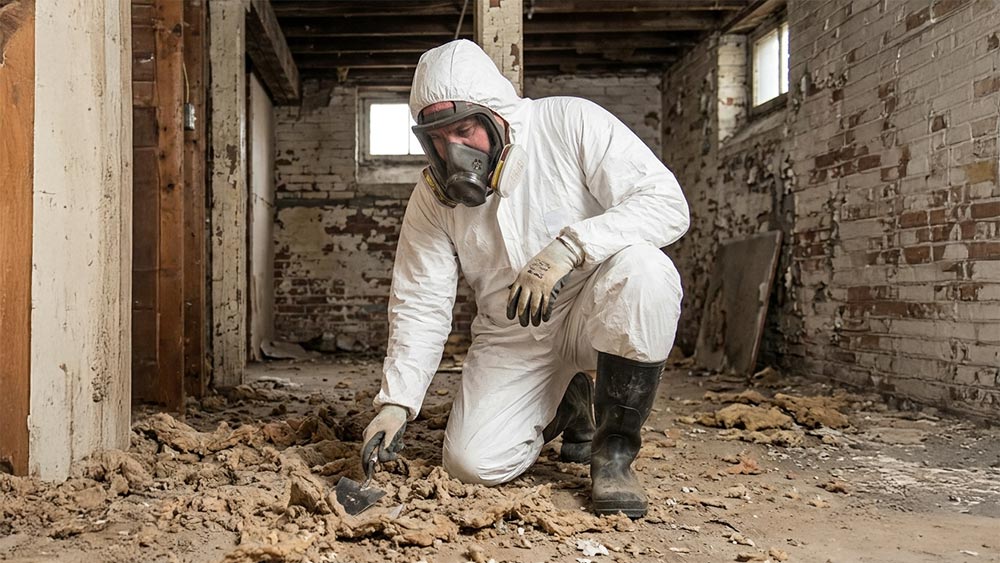
Many construction employers now use online asbestos awareness training as part of their health and safety arrangements. Online learning can be a convenient and cost-effective way of delivering awareness training across a workforce.
However, when reviewing asbestos awareness arrangements, it is worth understanding the difference between what is legally acceptable and what industry bodies recommend as best practice.
The Health and Safety Executive (HSE) makes it clear that asbestos awareness training is required for anyone whose work could foreseeably disturb asbestos-containing materials (ACMs).
This includes many occupations commonly found within construction, maintenance, refurbishment, and related trades.
The HSE also states that there is no legal requirement for employees to repeat a formal asbestos awareness course every 12 months. Instead, refresher information should be provided where necessary to ensure workers remain aware of the risks and know how to avoid accidental disturbance of asbestos.
Importantly, refresher awareness training may be delivered through various methods, including e-learning, toolbox talks, health and safety updates, or other suitable refresher activities.
Whilst recognising the HSE’s guidance on refresher training, UKATA takes the view that asbestos awareness training is most effectively delivered through face-to-face classroom training.
UKATA specifically states that:
UKATA’s recommended training programme alternates classroom-based awareness training with refresher training, allowing refresher training to be delivered either face-to-face or via e-learning between classroom sessions.
The HSE identifies a number of occupations that are more likely to encounter asbestos during their work activities.
Examples include:
These are all occupations where employees may disturb the fabric of buildings during installation, maintenance, refurbishment, or repair activities.
For many employers, the key consideration is not simply whether training is legally compliant, but whether it provides workers with the best opportunity to recognise asbestos risks before exposure occurs.
Online learning can play an important role, particularly for refresher training. However, classroom-based training provides opportunities for:
This is particularly valuable for workers who regularly undertake maintenance, refurbishment, installation, or repair activities in buildings that may contain asbestos.
Rather than asking whether online awareness training is acceptable, employers may wish to consider:
Many employers choose a blended approach, combining periodic face-to-face training with online asbestos awareness refresher training in intervening years.
This aligns closely with UKATA’s recommendations and helps ensure that workers who are most likely to encounter asbestos receive regular, meaningful reinforcement of the risks associated with asbestos-containing materials.
Ultimately, every employer must determine what is appropriate for their workforce. However, where employees work in occupations identified by the HSE as being at greater risk of asbestos exposure, it may be worthwhile reviewing whether online awareness training alone provides the most effective solution.
HSE Asbestos Training Guidance:
https://www.hse.gov.uk/asbestos/training.htm