
No products in the basket.
The Health and Safety Executive have published its latest annual statistics for work-related fatal injuries in Great Britain, providing another important reminder that effective health and safety management must remain a priority across every industry.
During the 2025/26 reporting period, 126 workers were killed in work-related accidents across Great Britain.
Although the long-term rate of fatal workplace injury has reduced substantially, the HSE warns that the rate of improvement has slowed in recent years. The latest total is also slightly higher than the 124 worker fatalities recorded during 2024/25, further demonstrating the importance of maintaining workforce competence through continual training, development and effective supervision.
Each statistic represents a worker who did not return home, and a family, workplace and community affected by a preventable tragedy.
Construction recorded 25 fatal injuries, the highest number of any main industry sector during 2025/26.
Fatal injuries by main industry included:
Construction and agriculture, forestry and fishing continue to account for the greatest number of work-related deaths each year.
These figures demonstrate why construction employers, principal contractors, supervisors and operatives must continue to challenge unsafe practices and ensure that suitable controls are properly planned, communicated and implemented.
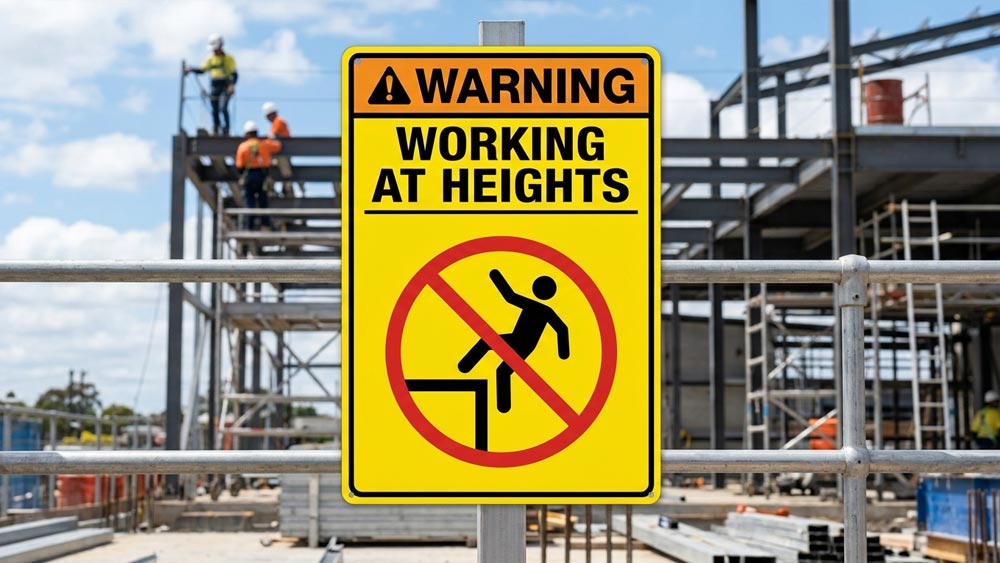
Falls from height remained the most common cause of fatal workplace injury, resulting in 31 deaths and accounting for approximately one quarter of all worker fatalities.
The main causes of fatal injury were:
Together, these five accident types accounted for more than four out of every five worker fatalities recorded during the year.
For construction organisations, the figures reinforce the importance of controlling familiar but potentially fatal risks involving scaffolds, roofs, fragile surfaces, excavations, lifting operations, workplace transport, construction plant and machinery.
Every excavation presents a potential risk.
Electricity cables, gas pipes, water mains, telecommunications, drainage systems and other services may be hidden beneath roads, footpaths, construction sites and private land. Striking one of these services can cause serious injury, fatalities, fire, explosion, flooding, environmental damage and significant disruption.
Effective utility avoidance is therefore an essential part of planning and carrying out excavation work safely.
The EUSR Utility Excavations Category 1: Locate Utility Services (HSG47) scheme covers the minimum training and assessment required for people who locate underground utility services using recognised detection methods.
The training is suitable for people involved in activities such as:
The programme helps candidates develop the knowledge and practical skills needed to examine the work area, interpret available service information and use locating equipment safely.
Effective utility-location training should include both theoretical learning and practical equipment use.
Candidates should have an opportunity to:
Practical training allows candidates to understand that utility detection is not simply a matter of switching on a locator and walking across the ground. Safe detection requires a structured method, repeated scanning and professional judgement.
If you would like to find out more about how Workforce Skills Support can help, please contact us.